


An adjustable extender looks like the easy answer. One product, one length range, everybody in the car sorted.
Sometimes that's exactly right. Often it isn't. Adjustable designs add slack, and slack is the one thing you don't want between your hips and a crash load. The wrong setting can lift the lap belt off your hip bones and onto your abdomen, which is where seat belt injuries happen. Add a tongue that doesn't quite match your car's buckle, and you get a product that clicks reassuringly while holding onto very little.
Our guide sets out which adjustable extenders are worth your money, how to fit and test one properly, when to walk away and use something else entirely, and how to check your own buckle before you order. The scorecard further down rates every option on the things that decide whether an extender holds, not on color choice or price.
Shop Best Adjustable Seat Belt Extenders
Safe, comfortable and easy to fit. Choose the right length for your car.
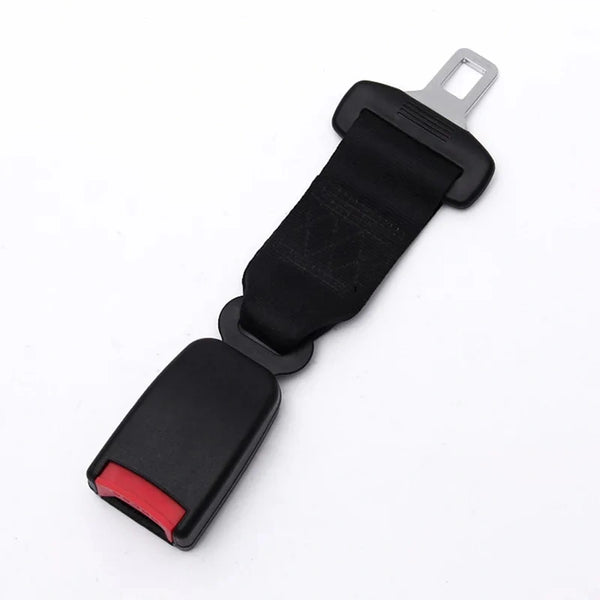
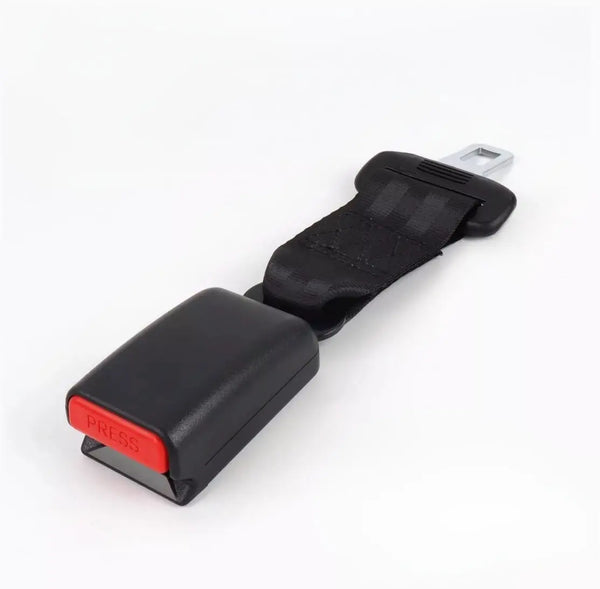
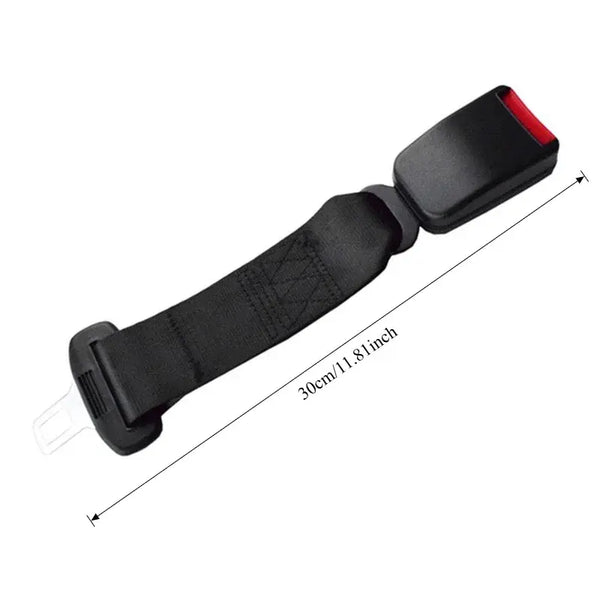
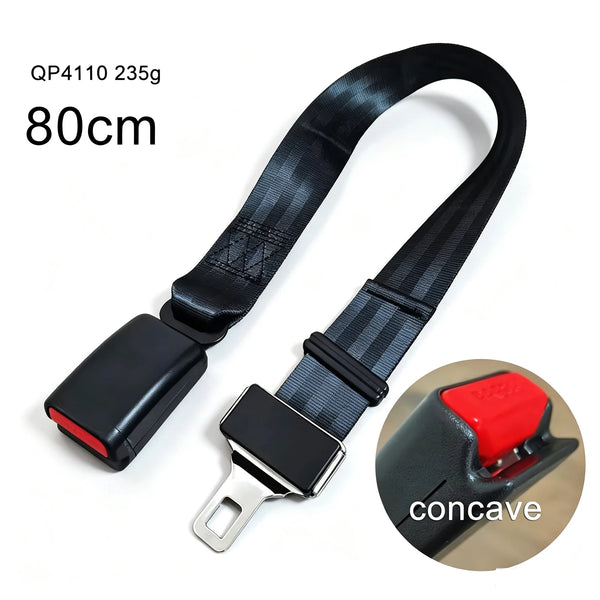
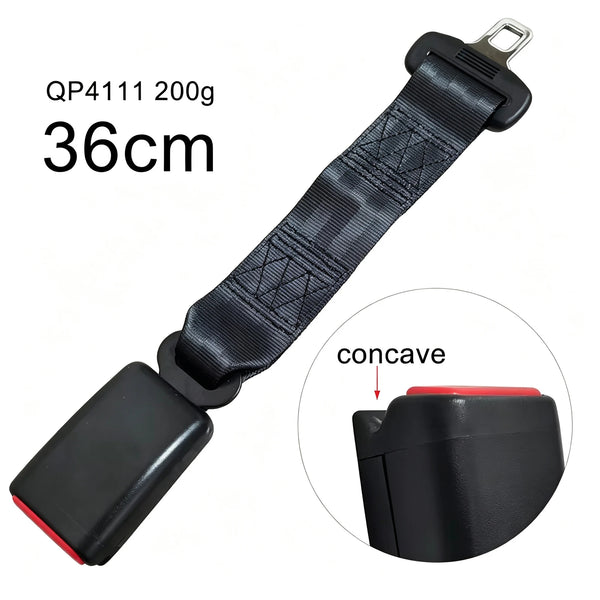
Comparison Table of Top Adjustable Extenders
The table below compares the main categories of adjustable seat belt extenders covered in our guide. Use it to narrow your options before you check exact vehicle compatibility.
| Product | Length Range | Certification | Load Rating | Buckle Compatibility | Price |
|---|---|---|---|---|---|
| Adjustable rigid buckle extender (30 to 80cm range) | 30 to 80cm adjustable | ECE R16 certified components | Webbing rated above 14,700 N (about 3,300 lb) per supplier test data; confirm on the product page | Metal tongue, typically 21 to 22mm; check your buckle slot | See product page |
| Fixed-length webbing extender (36cm or 45cm) | 36cm or 45cm fixed | ECE R16 certified | Automotive-grade polyester webbing; rating stated per product | Metal tongue, vehicle-specific width required | See product page |
| OEM or manufacturer-supplied extender | Varies by vehicle | Manufacturer tested as part of the restraint system | Matches factory belt rating | Exact make, model, year match | Dealer quote; often the dearest option |
| ECE R16 certified third-party extender (for example our 20cm rigid or 25cm universal) | 12 to 45cm depending on model | ECE R16 / E-mark (E4, E8) | Stated per product; look for a published figure | Metal tongue, vehicle-specific width required | See product page |
| Soft loop extender (child seat or accessibility use) | Fixed loop length | Varies; only use where the seat or vehicle maker approves it | Not published by most suppliers | Fabric loop, not a rigid buckle | Varies |
| Airline-style extender (air travel only, never in a car) | Fixed or adjustable, for example 18 to 81cm | FAA or EASA eligibility, which is an aviation approval and not a car safety standard | Aircraft lap belt specification only | Aircraft lift-latch buckle only | See product page |
Two points worth pausing on. First, the airline row is in the table so you can rule it out, not shortlist it. Aviation eligibility says nothing about car crash performance. Second, an adjustable extender only beats a fixed one when more than one person uses the seat. If the same person buckles up every day, a fixed length is simpler and leaves less room for error.
How to Use and Test an Extender Safely
Fitting is quick. Doing it in the right order, and checking it properly, is what separates a safe installation from a false sense of security. The sequence below covers the two connections and the two tests that catch most latch failures before you drive.
Step-by-Step Fitting
- Insert the extender's tongue into your car's buckle until you hear a clear click.
- Pull firmly on the extender webbing to confirm the latch is fully engaged.
- Buckle your seat belt tongue into the extender's buckle, again listening for the click.
- Tug hard on the seat belt webbing to verify the second connection.
- Adjust the extender length to the shortest setting that still allows comfortable belt positioning.
- Check that the lap belt sits low across your hips, not over your abdomen or incision site.
Expert Tip: Keep the extender as short as possible. Extra slack lets the lap belt ride up over the abdomen, which increases injury risk in a crash.
Adjustable models make that last tip easy to ignore, because setting them long feels more comfortable. Resist it. Set the length once, in a parked car, with the seat in your normal driving position, then leave it alone.
The Click Test and Tug Test
- Click test: Insert each connection slowly and listen for a single, sharp click. A soft or double click may mean the latch is not fully seated.
- Tug test: After each click, pull hard on the webbing in the direction of a crash load. The connection should hold without any movement or release.
- Perform both tests before every journey, even if the extender worked fine the day before.
Be clear about what these tests prove. They are functional checks, not crash tests. A firm tug catches an unseated tongue, a worn buckle spring or a mismatched latch style, and it catches those faults reliably. What it cannot do is replicate the forces of a collision, where loads run into the thousands of kilograms. Follow your vehicle manufacturer's seat belt inspection guidance in the owner's handbook alongside these checks, and read our full extender testing protocol for the checks we run before a product reaches our shelves.
Correct Lap and Shoulder Belt Positioning
- The lap belt must cross the hips, not the belly. For pregnant drivers, the belt goes below the bump, across the hip bones.
- The shoulder belt should cross the chest and collarbone, not the neck or face.
- If the extender changes the shoulder belt angle so it no longer touches the chest, the extender is too long or the wrong type.
- For post-surgery users, position the lap belt away from the incision site and check with a medical professional if unsure.

A quick sanity check after every adjustment: put two fingers under the lap belt at the hip. If you can pull a fist of slack, the setting is too long. Shorten it.
When Not to Use an Extender and Alternatives
An extender is not always the right fix. The situations below are the ones where you should stop and choose a different solution.
Damaged or Worn Buckles
- If your car's buckle is cracked, loose, or fails the tug test on its own, do not add an extender.
- A damaged buckle can release under load, and an extender will not fix the underlying problem.
- Have the buckle inspected and repaired or replaced by a qualified technician.
A faulty belt or buckle is also an MOT failure in the UK, so it needs sorting regardless. Where a like-for-like part is the answer, our buckle and receiver range and seat belt replacement kits should be fitted by a qualified technician, never bodged at the roadside.
Expert Tip: If the belt still sits wrong or the buckle is damaged, stop using the extender and consult a specialist or consider seat belt repair or replacement.
Incompatible Tongue or Latch Styles
- A tongue that clicks but does not fully engage is a serious hazard. Do not force a connection.
- If the extender's tongue width or latch style does not match your car's buckle, return it and get the correct one.
- Never modify the extender or buckle to make it fit.
Filing a tongue down, bending a stem or trimming webbing destroys whatever certification the part had. The same goes for stacking two extenders to gain length. One extender, correctly matched, or none at all.
Safer Alternatives to Aftermarket Extenders
- OEM extender first: Always try the vehicle manufacturer's own extender. It is crash-tested for your exact buckle and belt geometry.
- Seat belt repair or replacement: If the belt itself is too short or damaged, a professional webbing replacement may be safer than an extender.
- Seat belt adjuster clips for comfort: For neck discomfort only, a clip that repositions the shoulder belt may be a simpler, lower-risk option. Verify it does not alter lap belt position. Our seat belt clips cover that use case.
- Airline extenders are not car alternatives: Never use an airline seat belt extender in a car. Buckle geometry and load ratings are completely different.
Product Recommendation: For the safest aftermarket option, look for an ECE R16 or DOT-registered certified third-party extender that matches your exact tongue width and latch style. Avoid products with no stated testing standard. Start by narrowing the choice with our shop by car make tool, and check the full car seat belt extender range for the length you need.
Interactive Buckle-Type Identification Quiz
Buying the wrong tongue is the most common extender mistake, and the most expensive one in time. Work through the three questions below before you order, and you'll know your tongue width and latch style rather than guessing at them.
How the Quiz Works

Question 1: How wide is the metal tongue on your existing seat belt?
Unclip nothing. Just hold a ruler or caliper across the widest part of the metal tongue on your seat belt.
21 to 22mm: The most common size across UK and European cars. Most of our extenders are built for it.
Under 21mm or over 22mm: You need a width-matched extender. Message us with your make, model, year and seat position before ordering.
Question 2: What shape is the slot in the tongue?
Look at the cut-out where the buckle's locking pin grips.
Single rectangular slot (Type A): The standard European pattern, used by most of our range.
Narrow slot with a stepped edge (Type B): Common on some Japanese and Korean models. Check the product listing names Type B before buying.
Anything else: Send us a photo. Do not buy on hope.
Question 3: Where does your car's buckle sit?
Sunk into the seat cushion: Choose a rigid extender such as the 20cm rigid stem, which stands upright.
Easy to reach, belt just too short: Choose a webbing extender in the shortest length that works, starting around 23cm.
Shared between several people: Choose the 30 to 80cm adjustable extender and re-set the length for each user.
Still unsure after all three? Our guide on how to choose a seat belt extender walks through measuring in more detail, and our rigid vs flexible comparison covers which design suits which buckle.
Safety Scorecard Rating System
Star ratings tell you whether a product arrived on time. Our scorecard rates each extender category on the four factors that decide whether it holds in a crash, scored 1 to 5, for a total out of 20.
Scorecard Criteria
- Latch security: Does the tongue fully engage and hold under a firm tug test?
- Webbing strength: Is the stated breaking strength at least 6,000 pounds, aligned with FMVSS 209 webbing requirements?
- Certification: Does the product carry a recognizable mark such as ECE R16 or DOT registration?
- Belt positioning: Does the extender keep the lap belt low across the hips without adding dangerous slack?
| Extender | Latch Security | Webbing Strength | Certification | Belt Positioning | Total |
|---|---|---|---|---|---|
| OEM manufacturer extender | 5 | 5 | 5 | 5 | 20/20 |
| ECE R16 rigid extender, width matched | 5 | 4 | 5 | 5 | 19/20 |
| ECE R16 fixed webbing extender, shortest suitable length | 5 | 4 | 5 | 4 | 18/20 |
| Adjustable 30 to 80cm extender, set correctly | 5 | 4 | 5 | 3 | 17/20 |
| Soft loop extender without maker approval | 2 | 2 | 1 | 2 | 7/20 |
| Unbranded "universal" extender, no stated standard | 2 | 1 | 1 | 2 | 6/20 |
| Airline-style extender used in a car | 1 | 1 | 1 | 1 | 4/20 |
Notice where the adjustable extender loses its point. Latch and certification are as strong as any fixed model, but belt positioning depends entirely on the user setting it short and re-checking it. Score that criterion for yourself, honestly, before you choose adjustable over fixed.
How the scores were reached: Ratings are based on manufacturer test documentation, published certification marks and our own functional checks (click test, tug test, fit verification across vehicles). We do not carry out independent crash or destructive tensile testing, and no scorecard here should be read as a crash test result. In plain terms: latch security means the tongue seats fully and holds under hand load; webbing strength means a published breaking strength figure exists; certification means an approval mark is physically on the part, not just in the listing; belt positioning means the design keeps the lap belt on your hip bones. Our guide to spotting a fake or uncertified extender covers how to check a mark is genuine.
Frequently Asked Questions
Is it legal to use a seat belt extender in my car?
Legality varies by country and sometimes by state or province. In the UK and Europe, an extender should meet ECE R16 and carry an E-mark to be sold and used as a road-legal restraint component, and UK law requires the belt to be worn correctly. In the US, no single federal law bans aftermarket extenders, though some states may have restrictions. Check your local laws and your insurance policy before fitting one.
Will an aftermarket extender void my insurance?
It may be considered a modification, and some insurers require you to declare it. If you do not declare it and the extender is found to have contributed to an injury, your claim could be reduced or denied. Contact your insurer before use. A one-line note on your policy costs nothing and settles the question.
Can I use an airline seat belt extender in my car?
No. Airline extenders are designed for aircraft lap belts and have completely different buckle geometry and load ratings. Using one in a car is dangerous and may fail in a crash.
How do I know if an extender will fit my car?
Match the metal tongue width and latch style to your car's buckle. Measure your existing seat belt tongue width in millimetres and compare it to the extender's stated compatibility. Most UK and European cars use a 21 to 22mm tongue, but check rather than assume, and check each seat position separately. When in doubt, use the vehicle manufacturer's own extender.
What does FMVSS 209 mean for extenders?
FMVSS 209 is a US federal standard for seat belt assemblies, including webbing strength. It specifies a minimum breaking strength of 6,000 pounds (about 26.7 kN) for webbing. However, no universal federal certification exists for aftermarket extenders in the US, so a product claiming FMVSS 209 compliance should be verified against the manufacturer's test data. For UK buyers, ECE R16 approval is the more relevant mark.
Are there weight limits for seat belt extenders?
OEM extenders from vehicle manufacturers are typically rated to the same load specification as the original belt. Aftermarket extenders should state a load rating or breaking strength. If no rating is given, treat the product with caution.
Can I use an extender while pregnant?
Yes, if the extender keeps the lap belt low across your hips and below your bump. Choose the shortest length that works and test the latch before every journey. Consult your healthcare provider if you have concerns.
What is the difference between adjustable and fixed-length extenders?
Adjustable extenders let you change the length within a range, such as 30 to 80cm, which is useful if multiple people share the vehicle or your needs change. Fixed-length extenders add a set amount, such as 36cm or 45cm, and are simpler but less flexible. Both must match your buckle type.
Final Safety Checklist
Before you buy or use any seat belt extender, run through this checklist.
- Confirm the extender matches your car's make, model, year, and buckle type.
- Check for a stated certification such as ECE R16 or DOT registration.
- Verify the webbing breaking strength is at least 6,000 pounds if stated.
- Choose the shortest length that allows correct belt positioning.
- Test the latch with a firm tug before every journey.
- Check your insurance policy and local laws.
- Never use an airline extender in a car.
- If the belt still sits wrong, stop and consult a specialist.
Work through those eight points and the decision gets simple. Shared car, changing users, uncertain length? Take the 30 to 80cm adjustable extender. One regular user, one known length? A fixed 35cm or 45cm extender does the job with fewer variables.
Review, Authorship and Sources
Sources used for the safety claims above: UN ECE Regulation No. 16 (seat belts and restraint systems, UK and EU), FMVSS 209 (49 CFR 571.209, US seat belt assembly standard), NHTSA seat belt guidance, HSE and employer guidance on vehicle occupant restraint where relevant, and vehicle manufacturer handbook statements on seat belt inspection and extender approval. Specifications and regulations change, so if you spot an error, contact our team.

Written by
Piotr Nartowski
Our team specializes in ECE R16 certified seat belt extenders and fitment for UK and European vehicles. We test every product for latch security, webbing strength and correct belt positioning before it reaches our shelves.


